



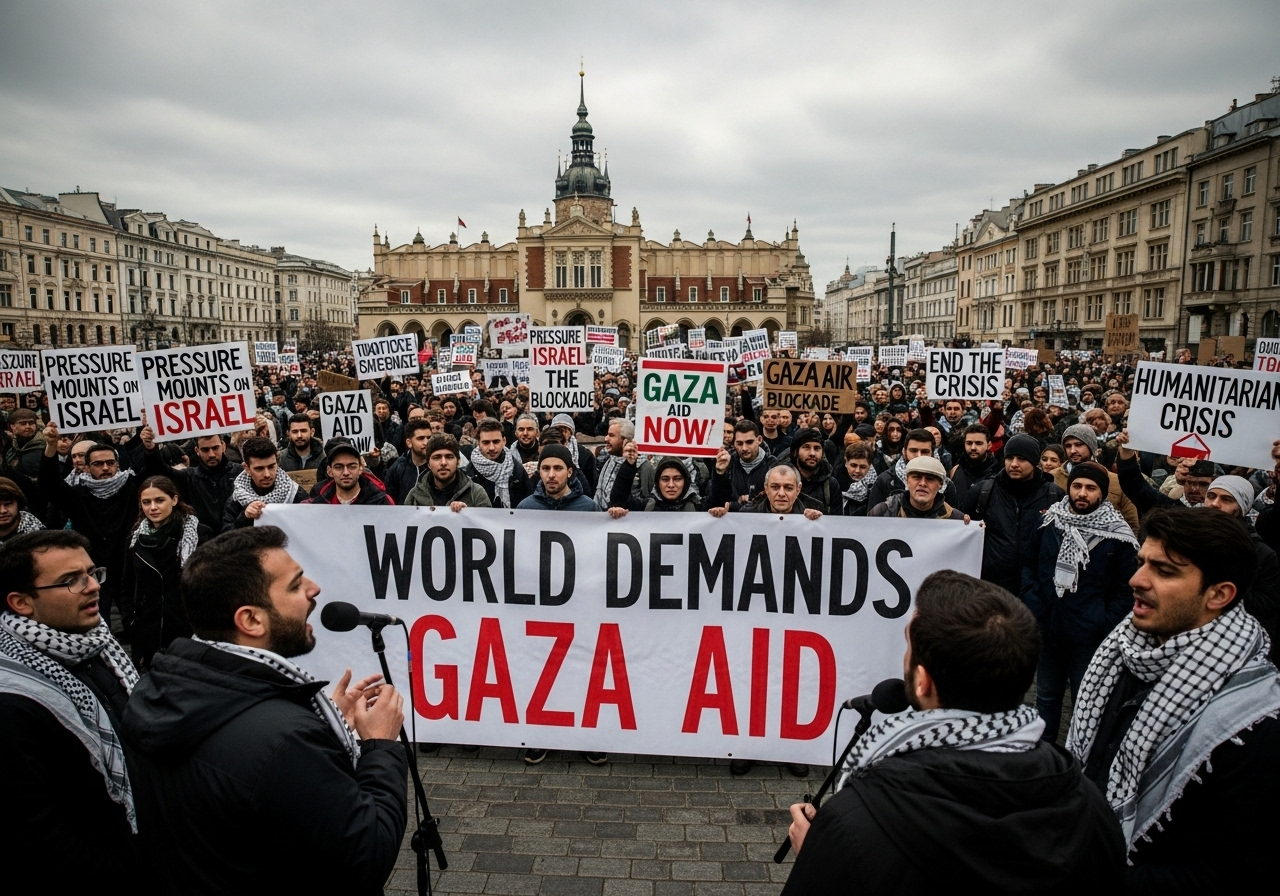
As a fragile ceasefire holds in Gaza following two years of devastating conflict, global pressure is mounting on Israel to lift restrictions on humanitarian aid deliveries. The United Nations, United States, European Union, and aid organizations are urging Israel to open more border crossings and allow a “massive surge” of supplies to avert a deepening famine. Despite an initial agreement for 600 aid trucks daily, Israel has halved that number to 300, citing delays in Hamas releasing hostage remains—sparking accusations of using aid as leverage.
The truce, effective from October 11, 2025, under a U.S.-brokered deal, aimed to exchange remaining Israeli hostages for Palestinian prisoners while scaling up aid. Yet, humanitarian groups report that inflows remain “insufficient,” with the Rafah crossing—Gaza’s lifeline to Egypt—still closed since Israeli forces seized it in May 2024. This has left 2.1 million Palestinians grappling with acute shortages of food, water, medicine, and fuel, exacerbating a crisis where famine was declared in northern Gaza in August.
Ceasefire Promises vs. Reality: Aid Bottlenecks Persist
Under the ceasefire terms, Israel committed to facilitating 600 trucks per day—the minimum deemed necessary by aid experts to stave off widespread starvation. However, on October 14, Israel’s Coordination of Government Activities in the Territories (COGAT) notified the UN it would permit only 300 trucks starting October 15, restricting fuel and gas to essential humanitarian infrastructure. UN spokesperson Olga Cherevko called this “not nearly enough,” emphasizing that Gaza needs thousands of trucks weekly to address the humanitarian catastrophe.
Aid agencies like Oxfam and UNICEF echo these concerns, advocating for multiple entry points, including northern crossings, to bypass devastated roads and reach isolated populations. “What Israel needs to do is very simple: open five or six border crossings,” said a UNICEF spokesperson, highlighting that current delays risk lives amid ongoing malnutrition and disease outbreaks. The World Health Organization (WHO) stressed the urgency for medical supplies, noting hospitals face overwhelming pressure post-ceasefire.
Israel defends the curbs, linking them to Hamas’s slow handover of hostage bodies. As of October 15, Hamas has released four remains, with four more expected, but retrieval from Gaza’s rubble poses challenges, per the International Red Cross. Israeli officials argue the restrictions prevent aid diversion by militants, though aid groups and the UN dispute this, accusing Israel of violating international law by using starvation as a weapon.
International Backlash: Calls for Accountability
The U.S., a key Israeli ally, has ramped up diplomacy. Secretary of State Antony Blinken urged Israel to ensure “thousands of trucks a week” enter Gaza, calling aid facilitation a “legal obligation.” The EU stands ready to deploy a border assistance mission at Rafah if conditions improve, while 28 countries earlier in 2025 demanded an end to Israel’s operations over aid obstructions.
Human Rights Watch and others warn that Israel’s blockade, ongoing since October 2023, has blocked 83% of aid, risking crimes against humanity. UNRWA and the World Food Programme report that despite some trucks entering via Kerem Shalom and Al Auja since October 12, the flow is a “drop in the ocean.”
Palestinian health authorities tally over 67,900 deaths and 170,000 injuries since 2023, with famine claiming thousands more indirectly. Displaced Gazans, many returning to ruined homes in the north, face dire conditions without clean water or shelter.
Outlook: A Test for Lasting Peace
This standoff tests the ceasefire’s viability. Analysts fear that without unrestricted aid, tensions could reignite, undermining hostage releases and reconstruction efforts. Israeli Prime Minister Benjamin Netanyahu faces domestic pressure too, with some supporting aid curbs to press Hamas. Yet, global leaders, including from the UK, France, and Canada, warn of “concrete actions” if restrictions persist.
As aid convoys queue at borders, the world watches. Sustained international scrutiny may force concessions, but for Gaza’s civilians, time is running out.
References:
- The Guardian: Israel urged to open more Gaza border crossings
- Al Jazeera: Israel imposes new Gaza aid restrictions
- NPR: Israel keeps Gaza border crossing closed
- Reuters: Israel cuts agreed aid into Gaza
- The Guardian: Israel limits aid into Gaza
- EL PAÍS: Humanitarian aid enters Gaza, but UN warns it’s still not enough
- Human Rights Watch: Israel Again Blocks Gaza Aid
- Wikipedia: Israeli blockade of the Gaza Strip (2023–present)
- NPR: Preparations begin to ramp up aid in Gaza
- BBC: Gaza: Israel allows aid in after 11-week blockade
- Al Jazeera: 28 countries called for an end to Israel’s war on Gaza
