



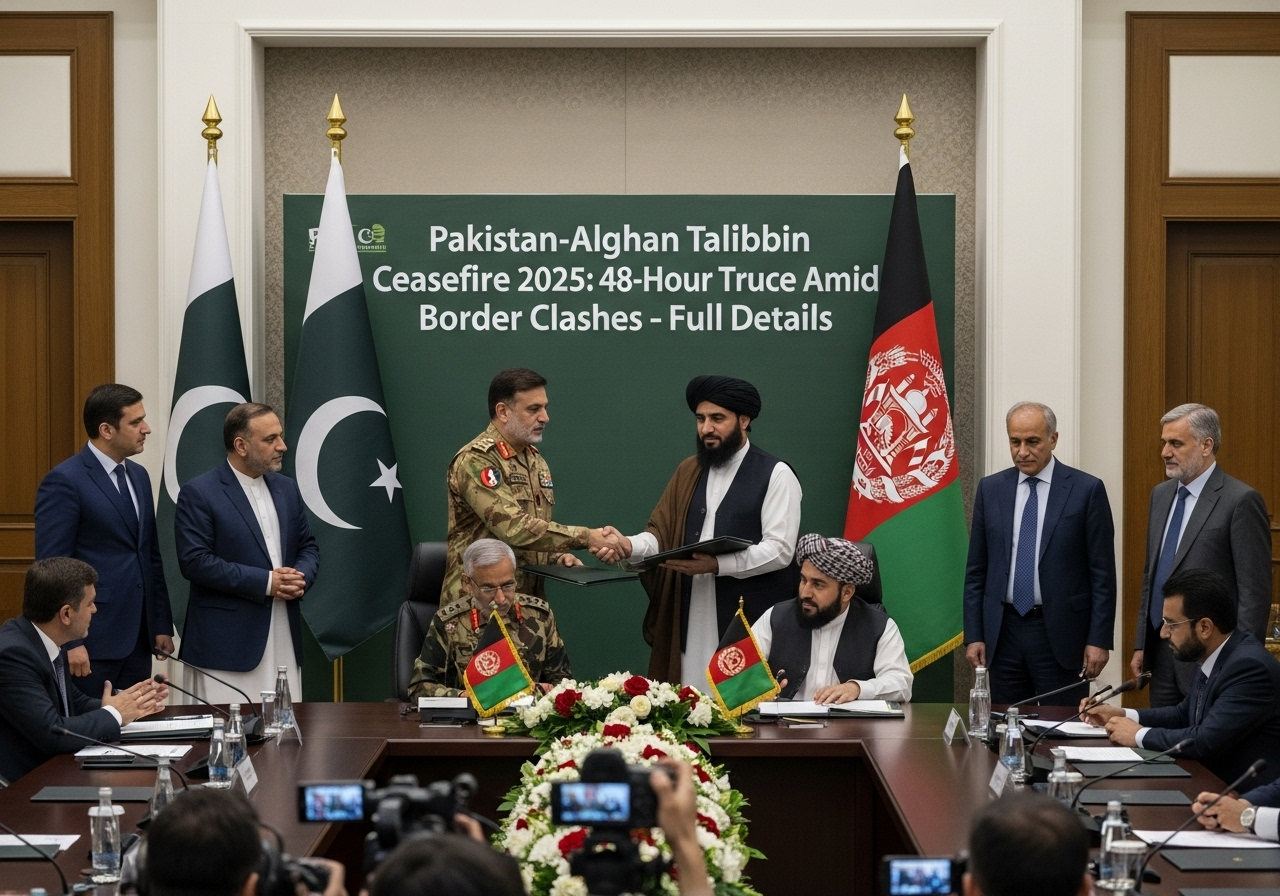
In a swift bid to halt spiraling violence along the volatile Durand Line, Pakistan and the Afghan Taliban administration have agreed to a temporary 48-hour ceasefire, effective from 6:00 p.m. local time on October 15, 2025. The announcement, confirmed by Pakistan’s Foreign Ministry, comes after days of intense cross-border clashes that claimed dozens of lives, including civilians, and marked the worst confrontation between the neighbors since the Taliban’s 2021 takeover in Kabul.
The truce, described as “temporary” and requested by Kabul according to Islamabad, offers a brief respite but underscores deep-seated mistrust. Both sides have pledged to pursue dialogue for a lasting resolution, yet the fragile peace hangs in the balance amid accusations of harboring militants and territorial incursions. This development, unfolding just weeks before key regional summits, could reshape South Asian security dynamics—or unravel into further chaos.
The Spark: Deadly Clashes Ignite Old Rivalries
Tensions boiled over last weekend when Pakistani forces reported repelling incursions by Afghan Taliban fighters in the restive Kurram District and near the Chaman border crossing in Balochistan. Pakistan accused the Taliban of sheltering Tehrik-i-Taliban Pakistan (TTP) militants—also known as the Pakistani Taliban—who have intensified attacks inside Pakistan since the Afghan Taliban’s return to power. These groups, allied with the Afghan regime, have claimed responsibility for bombings and ambushes that killed hundreds of Pakistani troops and civilians this year alone.
In retaliation, Kabul alleged repeated violations of Afghan sovereignty, including airspace incursions. On October 12, Afghan forces targeted Pakistani military posts, reportedly killing 58 soldiers, though Islamabad disputed the figure at 23. The skirmishes escalated dramatically on October 15, with explosions rocking Kabul and Kandahar provinces. Pakistani airstrikes hit Spin Boldak in Kandahar, a key border town, targeting what officials called a Taliban brigade. Afghan sources decried the strikes as unprovoked, claiming they struck residential areas and killed at least 12 civilians while wounding over 100.
Eyewitness accounts from Chaman described scenes of chaos: smoke billowing across the frontier as artillery fire lit up the night sky. Families fled on foot and in overloaded trucks, evacuating women and children amid the din of gunfire. Taliban spokesman Zabihullah Mujahid, in a post on X (formerly Twitter), condemned the attacks as “barbaric” and vowed retaliation unless aggression ceased.
Casualty figures remain contested. Pakistan’s military claimed to have neutralized over 200 “Taliban and affiliated terrorists,” while the Afghan side reported heavy losses among its forces but emphasized civilian tolls. Independent verification is scarce in the rugged, Taliban-controlled border regions, but human rights monitors warn of a humanitarian crisis brewing, with displaced families straining already fragile aid networks.
Ceasefire Terms: A 48-Hour Window for Diplomacy
Pakistan’s Foreign Ministry framed the agreement as a mutual commitment to de-escalate, with the ceasefire kicking in at 1:00 p.m. GMT on Wednesday and lasting until Friday evening. “Both sides will make sincere efforts through dialogue to resolve this complex yet resolvable standoff,” the statement read. Mujahid echoed the call, instructing Afghan forces to hold fire “as long as no one violates it,” though he attributed the truce to “insistence from the Pakistani side.”
Notably, the Taliban did not specify a 48-hour limit in their announcement, hinting at conditional extensions based on compliance. Behind-the-scenes talks, possibly mediated by neutral parties like China or Qatar, facilitated the deal. Beijing, with economic stakes in both nations via the Belt and Road Initiative, has urged restraint to protect CPEC projects in Pakistan’s northwest.
Root Causes: Durand Line Disputes and Militant Safe Havens
At the heart of the Pakistan-Afghan Taliban ceasefire lies the enduring Durand Line dispute—a 19th-century colonial border rejected by Kabul as artificial, dividing Pashtun tribes and fueling insurgencies for decades. Post-2021, Pakistan’s hopes for a friendly Taliban regime soured as TTP attacks surged 50%, with Islamabad blaming Afghan soil for safe havens. The Taliban counters by accusing Pakistan of disinformation and harboring ISIS-Khorasan operatives to destabilize their rule.
Compounding factors include a recent Afghan Foreign Minister’s visit to India—Pakistan’s arch-rival—prompting Islamabad to “take strong note.” Water-sharing rows over the Kunar River and refugee repatriations add layers of friction. Analysts note that without addressing TTP extraditions or border fencing, such truces remain band-aids on a festering wound.
Implications: Regional Stability at Stake
This 2025 ceasefire could avert a full-scale proxy war, but risks loom large. A prolonged standoff might embolden jihadist groups like al-Qaeda or ISIS-K, exploiting the chaos to regroup. Economically, border closures have already disrupted $2 billion in annual trade, hitting Pashtun traders hardest.
For Pakistan, reeling from internal floods and elections, the truce buys time to bolster defenses. The Taliban, focused on governance legitimacy, gains breathing room but faces domestic backlash for perceived weakness. International actors, including the UN, call for inclusive talks to prevent spillover into Central Asia.
As the clock ticks on this 48-hour pause, the world watches. Will dialogue prevail, or will the Durand Line claim more blood? Only time—and trust—will tell.
Word count: 748
References:
