



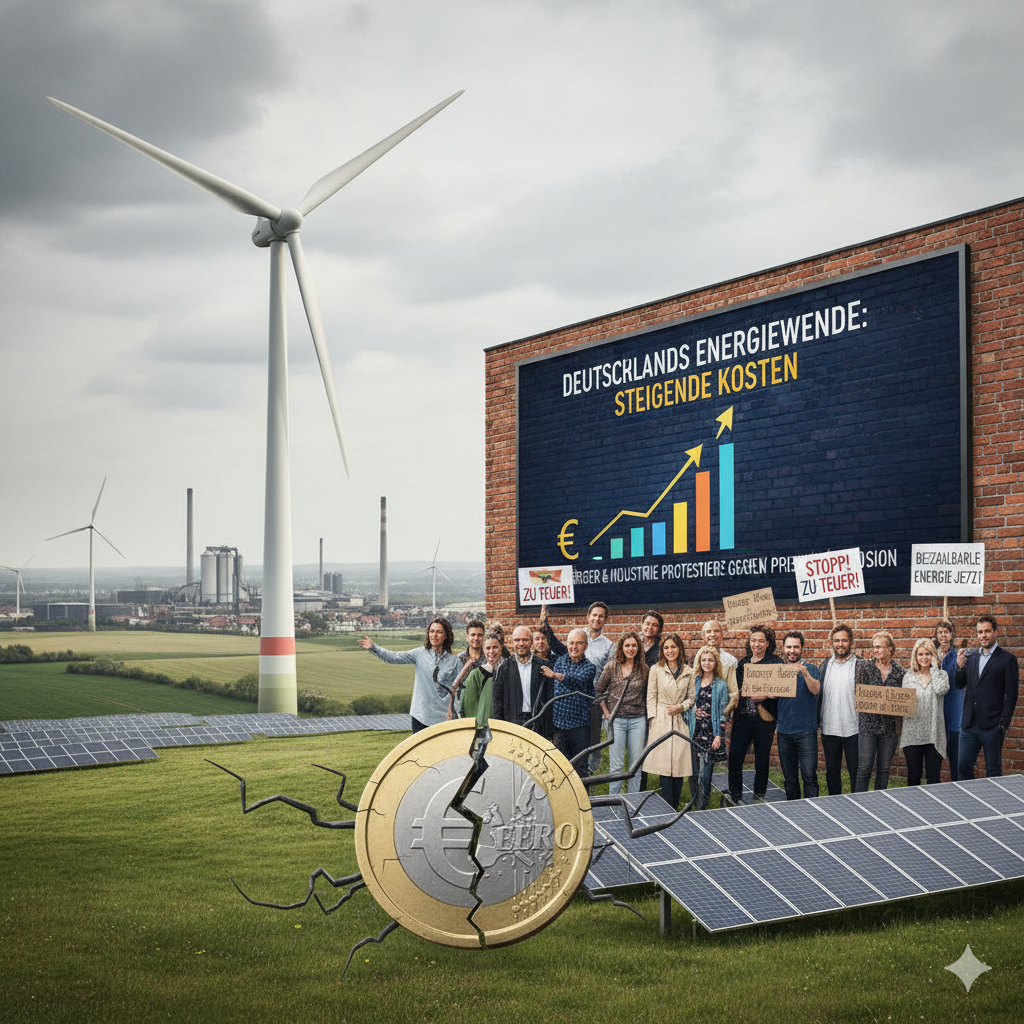
Germany’s aggressive transition to renewable energy—once hailed as a model for climate leadership—is now facing mounting public backlash as electricity prices reach record highs. Despite impressive gains in solar and wind capacity, many citizens and businesses are struggling with the financial burden of the country’s Energiewende (energy transition), prompting calls for policy reform and greater transparency.
Soaring Electricity Prices Spark Public Outcry
According to DW, Germany currently has the highest electricity prices in Europe. While renewables accounted for nearly 59% of the country’s electricity generation in 2024, inconsistent output—especially during winter months—has forced reliance on coal, gas, and imported energy, driving up costs.
During periods of low wind and solar output, Germany increasingly imports electricity from neighboring countries like France, which relies heavily on nuclear power. This dependency, combined with the shutdown of Germany’s last nuclear plants in 2023, has intensified scrutiny of the government’s energy strategy.
EEG Subsidies and Market Volatility
A key factor behind rising costs is the Renewable Energy Act (EEG), which guarantees fixed feed-in tariffs to renewable energy producers. As market prices for electricity fluctuate, the government must cover the difference—often resulting in billions in subsidy payments.
A recent analysis by the Institute of Energy Economics at the University of Cologne (EWI) projects EEG support costs could reach €23 billion by 2029, despite older solar and wind plants phasing out of high-rate subsidies. The expansion of open-space solar systems is expected to triple by 2029, further increasing funding demands.
Economic and Political Ramifications
The financial strain is being felt across sectors. Small businesses, manufacturers, and households are voicing frustration over unpredictable energy bills. Critics argue that the government’s push for renewables has outpaced infrastructure readiness and market regulation, leaving consumers to bear the brunt.
Germany’s Federal Cartel Office is investigating whether energy companies have manipulated supply to inflate prices—raising concerns about fairness and competition in the electricity market.
Government Response and Future Outlook
To mitigate the backlash, the German government has introduced dynamic pricing models, allowing consumers to adjust usage based on real-time supply and demand. This incentivizes energy consumption during peak renewable output, such as sunny or windy periods.
Additionally, federal funding for renewables is expected to stabilize in 2025, with projections suggesting a drop to €18 billion, according to PV Magazine. However, experts warn that without structural reforms, Germany’s energy transition risks losing public support.
Conclusion
Germany’s green energy ambitions remain a cornerstone of its climate policy, but the rising costs and public dissatisfaction signal a need for recalibration. Balancing environmental goals with economic realities will be crucial as the country navigates the next phase of its energy transformation.
