



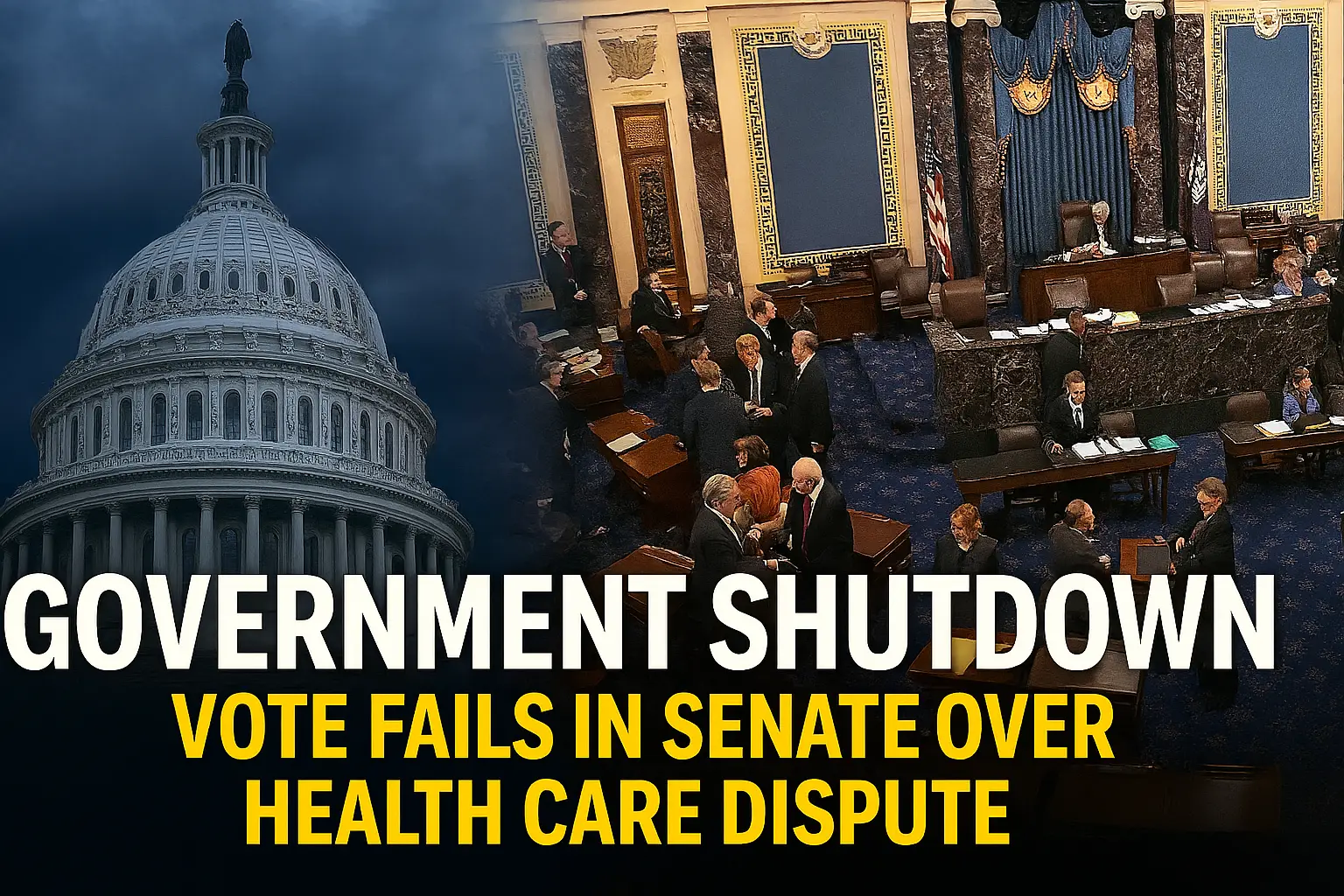
The United States government remains in a state of shutdown as the Senate failed once again to pass a funding bill, extending a political deadlock that has left federal agencies paralyzed and thousands of workers furloughed. The latest vote, held on Friday, October 4, 2025, marked the fourth unsuccessful attempt to approve a stopgap funding measure, with partisan divisions over health care subsidies at the heart of the impasse.
What Happened in the Senate?
Senate Majority Leader John Thune (R-SD) pushed for a seven-week continuing resolution (CR) that would maintain current spending levels and reopen the government. Despite securing 54 votes in favor, the bill fell short of the 60-vote threshold required to overcome a filibuster. Only three Democrats—Sens. Catherine Cortez Masto, John Fetterman, and Independent Angus King—broke ranks to support the measure.
Democrats, led by Minority Leader Chuck Schumer, have refused to back any funding bill that does not include an extension of Affordable Care Act (ACA) tax credits, which are set to expire at the end of the year. These subsidies have helped millions of Americans afford health insurance since the COVID-19 pandemic and remain a top priority for Democratic lawmakers.
“It’s Day 3 of the Trump shutdown, and the government remains closed because Donald Trump and Republicans insist on raising Americans’ health care premiums and kicking millions off their insurance,” Schumer said on the Senate floor.
— Source: MSN
Key Issues Behind the Stalemate
- Health Care Subsidies: Democrats demand a legislative guarantee to extend ACA tax credits before agreeing to any funding bill.
- Republican Strategy: GOP leaders insist that health care negotiations should occur after the government reopens, not as a precondition.
- Filibuster Barrier: With Republicans holding a 53–47 majority, they still need at least seven Democratic votes to pass any funding bill.
Impact of the Shutdown
The shutdown has already triggered widespread disruptions:
- Federal Workers: Hundreds of thousands are furloughed or working without pay, with no back pay until a deal is reached.
- Public Services: Agencies like FEMA, TSA, and the National Gallery of Art have scaled back operations or closed entirely.
- Economic Ripple: The Congressional Budget Office estimates the shutdown costs $400 million per day in lost productivity and delayed services.
“We’re trying to convince them this is the right thing to do… then let’s go right to work on fixing the issues,” said Sen. Mike Rounds (R-SD), urging Democrats to reopen the government first.
— Source: MSN
What’s Next?
With no votes scheduled over the weekend and the House in recess until mid-October, the shutdown is expected to continue into next week. Senate leaders are hoping that informal bipartisan talks may yield a compromise, but no formal negotiations have been announced.
Sen. Richard Blumenthal (D-CT) expressed cautious optimism, saying there are “real and significant glimmers of hope” for a resolution, though no concrete deal is on the table.
