



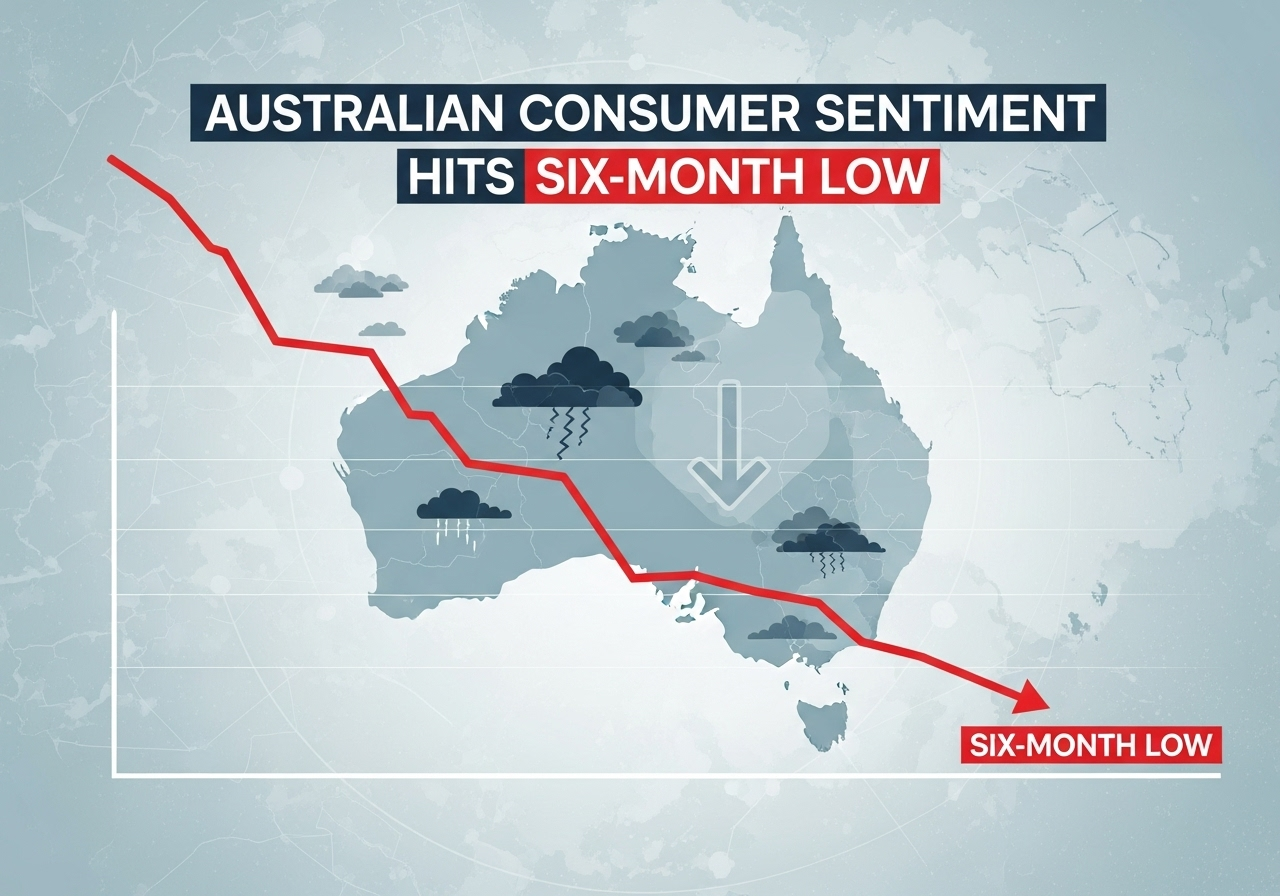
Australia’s consumer confidence has plunged to its lowest level in six months, reflecting growing anxiety over persistent inflation, rising living costs, and uncertainty surrounding future interest rate decisions. The latest data from Westpac’s Consumer Sentiment Index reveals a sharp decline in optimism, raising concerns about household spending and broader economic momentum.
Confidence Slips as Inflation BiteS
According to the Westpac-Melbourne Institute Consumer Sentiment Index, sentiment fell by 2.9% in October 2025, marking the lowest reading since April. The index now sits at 78.5, well below the neutral level of 100, indicating that pessimists significantly outnumber optimists.
This downturn is largely attributed to renewed inflation concerns, particularly in essential categories like food, fuel, and housing. Despite signs of easing price pressures earlier in the year, recent data suggests inflation may be more stubborn than expected, prompting fears of further rate hikes by the Reserve Bank of Australia (RBA).
Housing and Interest Rates Weigh Heavily
One of the most significant contributors to the decline in sentiment is the outlook on interest rates. As reported by Reuters, nearly 60% of survey respondents expect rates to rise again within the next 12 months. This expectation has dampened confidence in the housing market, with the “time to buy a dwelling” sub-index falling by 4.2%.
Higher borrowing costs have already impacted mortgage affordability, and many households are bracing for increased repayments. The RBA’s cautious stance—despite holding rates steady in its last meeting—has done little to reassure consumers, who remain wary of further tightening.
Spending Intentions Take a Hit
The survey also revealed a drop in spending intentions, particularly for discretionary items. The “family finances vs a year ago” component fell by 3.5%, while expectations for finances over the next 12 months declined by 2.1%. This suggests that households are tightening their belts, which could weigh on retail sales and broader economic activity heading into the holiday season.
As noted by ABC News Australia, economists warn that weak consumer sentiment may translate into slower GDP growth, especially if wage gains fail to keep pace with inflation
Global Factors Add to Uncertainty
Beyond domestic pressures, global economic headwinds are also influencing sentiment. Volatile commodity prices, geopolitical tensions, and concerns about China’s economic slowdown have added layers of uncertainty for Australian consumers and businesses alike.
The Australian dollar has also weakened slightly against major currencies, increasing the cost of imported goods and further straining household budgets.
What This Means for Businesses and Policymakers
For businesses, the drop in consumer confidence signals a potential slowdown in demand. Retailers, hospitality providers, and service industries may need to adjust expectations and prepare for more cautious spending behavior.
Policymakers, meanwhile, face a delicate balancing act. While inflation control remains a priority, the RBA must also consider the impact of monetary policy on consumer sentiment and economic growth. The next few months will be critical in shaping Australia’s economic trajectory.
Final Thoughts
Australia’s consumer sentiment hitting a six-month low underscores the fragile state of household confidence amid inflationary pressures and rate uncertainty. With spending intentions weakening and housing affordability under strain, both businesses and policymakers must stay alert to shifting consumer behavior.
As the country navigates these challenges, maintaining economic stability will require clear communication, targeted support, and a careful calibration of monetary policy.
For more details, you can explore the full report on Westpac’s official site and coverage from Reuters and ABC News Australia.
