



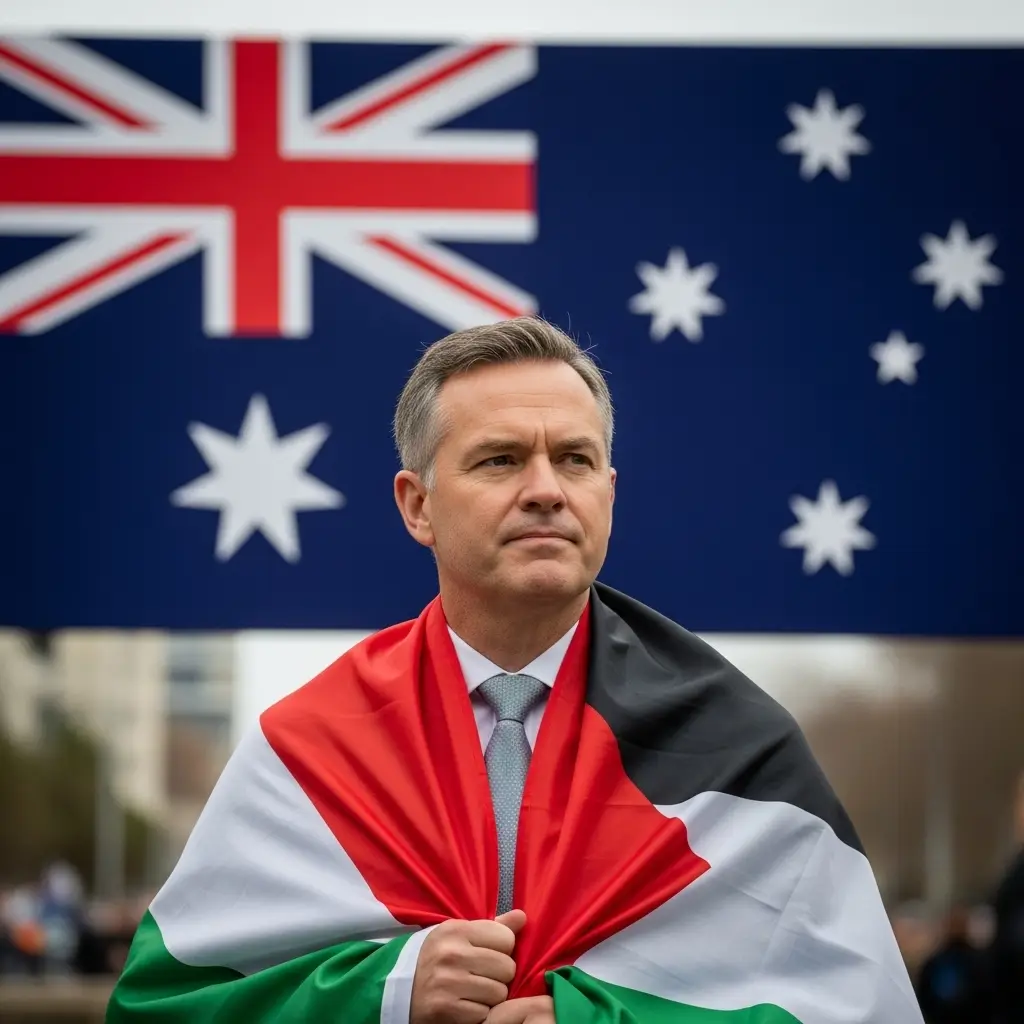
In a landmark diplomatic move, Australia has formally recognized the State of Palestine during the 80th United Nations General Assembly (UNGA), aligning with a growing coalition of Western nations advocating for a renewed two-state solution in the Middle East.
Prime Minister Anthony Albanese made the announcement on September 21, 2025, during a high-profile conference co-hosted by France and Saudi Arabia at the UN headquarters in New York. Australia’s recognition joins similar declarations from the UK, Canada, France, Belgium, and several other European nations, marking a pivotal shift in international consensus on the Israeli-Palestinian conflict
A Coordinated Global Effort
Australia’s recognition is part of a coordinated international initiative aimed at building momentum for peace in the region. The move comes amid escalating violence in Gaza and mounting global frustration over stalled negotiations and humanitarian crises.
“In recognizing Palestine, Australia acknowledges the legitimate and long-held aspirations of the Palestinian people,” Albanese stated. “This is about more than a seat at the table—it’s about restoring hope for a peaceful, sovereign homeland.”
The recognition also coincides with calls for a ceasefire in Gaza, the release of hostages taken during the October 7, 2023 atrocities, and the reconstruction of war-torn areas.
Conditions for Recognition
Australia’s recognition is not unconditional. The government has outlined specific expectations for the Palestinian Authority (PA), including:
- Democratic Elections: The PA must commit to holding free and fair elections.
- Governance Reform: Transparent and accountable systems must be implemented.
- Exclusion of Hamas: The militant group must play no role in future Palestinian governance.
- Commitment to Peace: The Palestinian state must remain demilitarized and committed to peaceful coexistence with Israel.
These conditions aim to ensure that recognition leads to a stable, democratic state capable of contributing to long-term regional peace.
International Reactions
The announcement has drawn mixed reactions globally. While many human rights organizations and UN member states have praised the move, some critics—including factions within the U.S. government—have expressed concern over the timing and potential diplomatic fallout.
Despite this, the number of UN member states recognizing Palestine has now risen to at least 157 out of 193, signaling a growing shift in global sentiment.
French President Emmanuel Macron, who co-hosted the conference, emphasized the urgency of ending the war in Gaza: “Nothing justifies the ongoing violence. Everything compels us to end it.”
Implications for Middle East Peace
Australia’s decision is widely seen as a symbolic yet strategic step toward reviving the long-stalled two-state solution. It also reflects a broader trend among Western nations to reassert diplomatic influence in the region and support humanitarian efforts.
The move may encourage further international engagement, including the development of a credible peace plan, reconstruction of Gaza, and security guarantees for both Palestinians and Israelis.
What’s Next?
Australia is expected to consider further steps, including the establishment of diplomatic relations and the opening of embassies, as the Palestinian Authority progresses on its reform commitments.
Foreign Minister Penny Wong confirmed that Australia will continue working with Arab League nations, the United States, and other partners to support peace-building efforts and ensure regional stability.
