



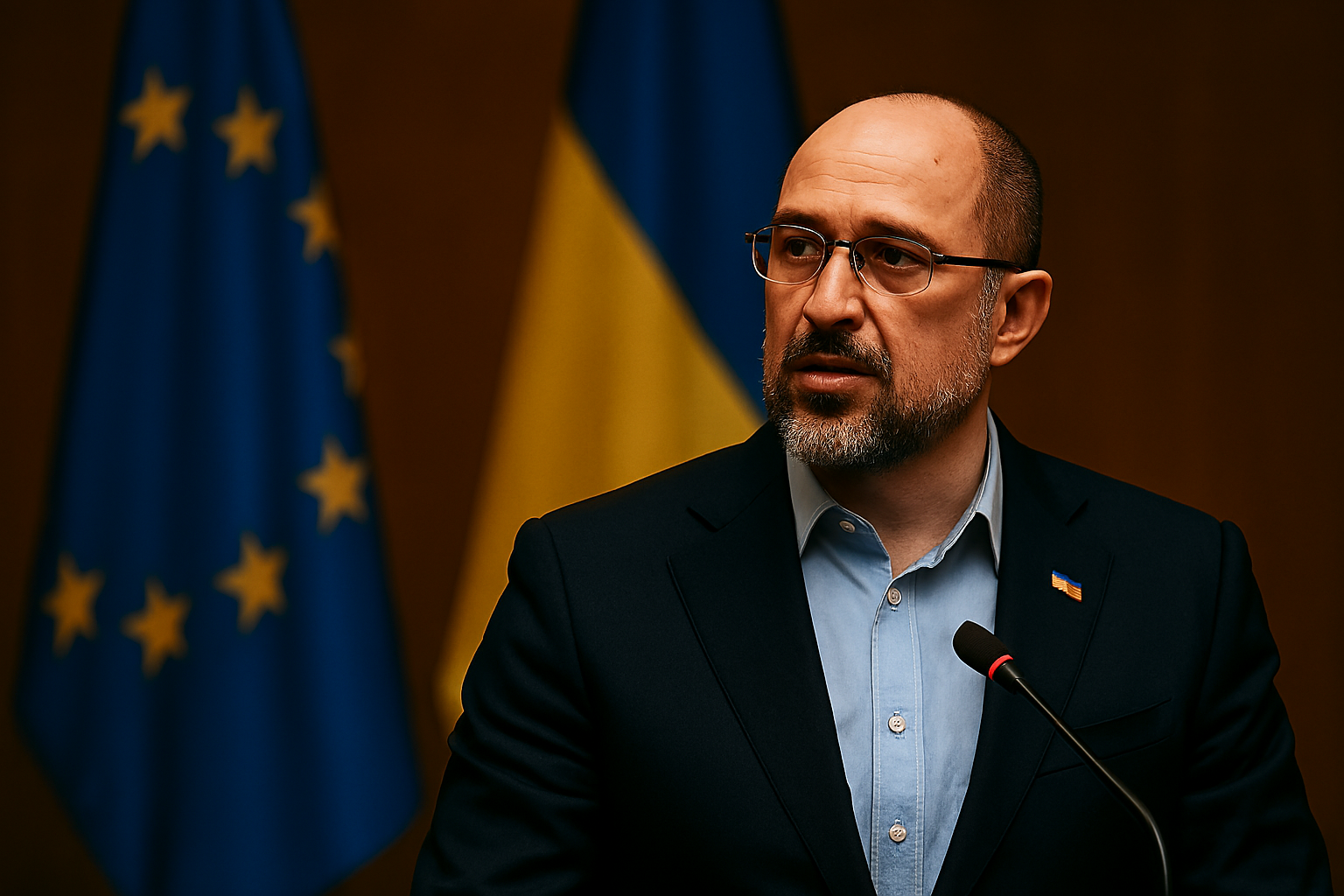
As the war in Ukraine continues to reshape global geopolitics, Ukrainian Prime Minister Denys Shmyhal has made a bold appeal to European leaders: confiscate frozen Russian assets and redirect them toward Ukraine’s defense and reconstruction. The call, delivered during a high-level EU summit, underscores Kyiv’s urgent need for financial support and the growing pressure on Western allies to take decisive action.
A Strategic Push for Asset Seizure
Shmyhal’s proposal centers on the estimated $300 billion in Russian central bank reserves and oligarch-linked assets currently frozen across Europe and North America. These funds, he argues, should be repurposed to help Ukraine rebuild critical infrastructure, support its military, and stabilize its economy amid relentless Russian aggression.
“We must turn frozen Russian assets into weapons and hospitals,” Shmyhal stated, emphasizing that justice demands the aggressor pay for the damage it has caused.
Legal and Political Challenges
While the idea has gained traction among some EU lawmakers, legal hurdles remain. Under current international law, confiscating sovereign assets without due process could set a controversial precedent. European officials are exploring mechanisms that would allow asset seizure while maintaining legal integrity, such as linking the funds to war reparations or using them as collateral for aid packages.
The European Commission has already proposed a framework to manage and invest frozen Russian assets, with profits potentially directed toward Ukraine. However, full confiscation would require coordinated legislative action across multiple jurisdictions.
Growing Support Across Europe
Several Baltic and Eastern European nations have voiced strong support for Shmyhal’s proposal. Poland, Estonia, and Lithuania have called on the EU to accelerate legal reforms that would enable asset seizure, citing moral responsibility and strategic necessity.
French President Emmanuel Macron and German Chancellor Olaf Scholz have expressed cautious openness, noting the importance of balancing justice with legal norms. Meanwhile, European Commission President Ursula von der Leyen has pledged to explore “all legal avenues” to ensure Russia contributes to Ukraine’s recovery.
Implications for Global Finance
Confiscating Russian assets could have far-reaching consequences for global financial systems. Critics warn that such actions might undermine trust in Western banking institutions, prompting other nations to diversify reserves away from the dollar and euro. However, supporters argue that the unprecedented nature of Russia’s invasion justifies extraordinary measures.
The move could also send a powerful signal to authoritarian regimes worldwide: aggression comes with a steep financial cost
Ukraine’s Urgent Needs
Ukraine’s defense budget has ballooned since the start of the war, with billions needed monthly to sustain operations, repair infrastructure, and support displaced citizens. International aid has helped bridge the gap, but long-term sustainability requires new funding sources.
Redirecting frozen Russian assets could provide a lifeline, allowing Ukraine to maintain resilience without overburdening Western taxpayers.
Conclusion
Prime Minister Shmyhal’s call to confiscate Russian assets marks a pivotal moment in the international response to the Ukraine conflict. As EU leaders weigh legal, financial, and ethical considerations, the proposal could redefine how the world holds aggressors accountable.
Whether or not the plan moves forward, it reflects a broader shift toward proactive justice and strategic deterrence in global affairs
