



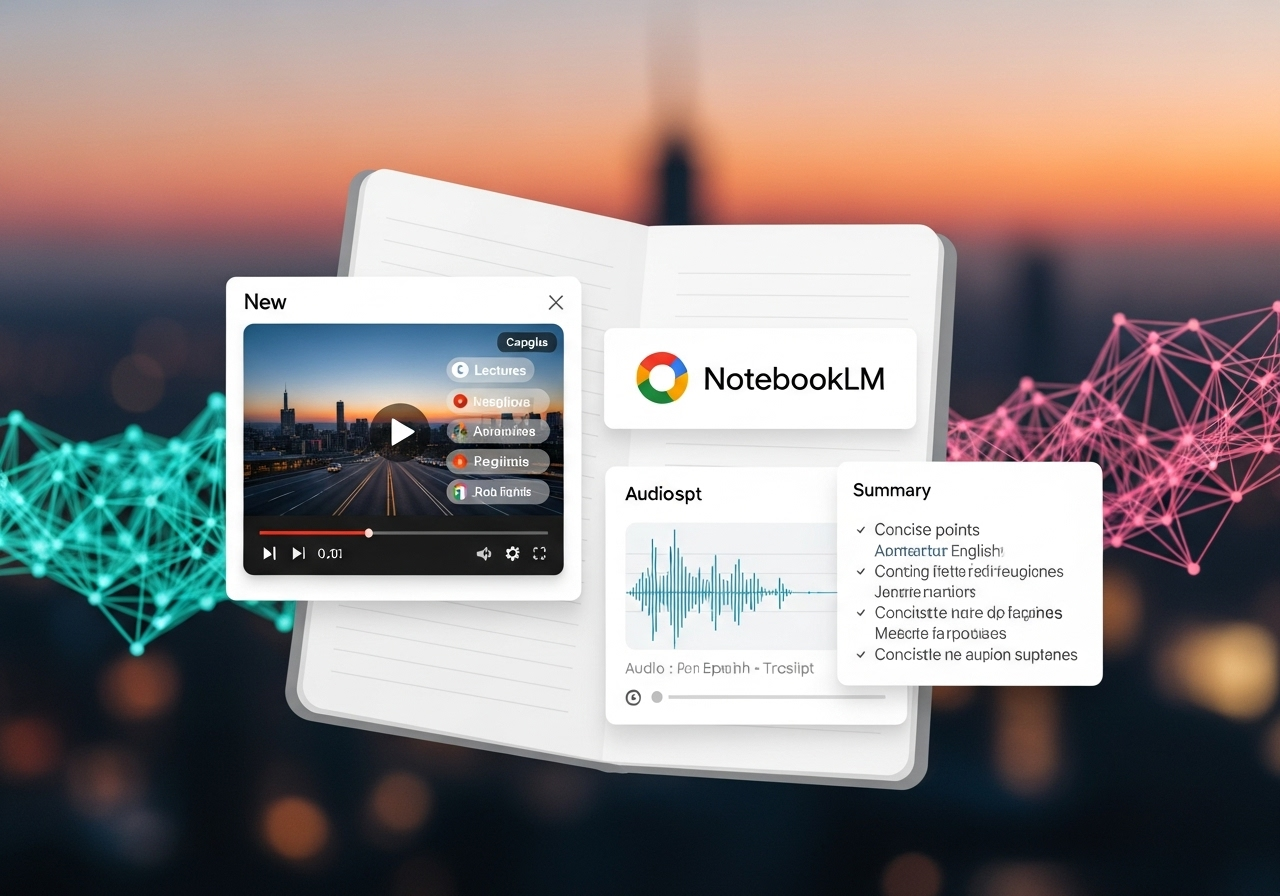
Google has just rolled out a major update to its AI-powered research assistant, NotebookLM, introducing multilingual support for video and audio summaries. This enhancement marks a significant leap in accessibility and productivity, allowing users across the globe to extract key insights from multimedia content in their native languages.
What Is NotebookLM?
Originally launched as an experimental tool under Google Labs, NotebookLM is designed to help users synthesize information from various sources—documents, transcripts, and now multimedia. It uses large language models (LLMs) to generate concise summaries, answer questions, and organize content into structured notes.
With the new update, NotebookLM can now process video and audio files, generating summaries in multiple languages, including Spanish, Hindi, Arabic, French, and more. This makes it a powerful tool for students, researchers, journalists, and content creators working across linguistic boundaries.
Why Multilingual Summaries Matter
The addition of multilingual capabilities addresses a critical gap in AI accessibility. Until now, most summarization tools were limited to English, leaving non-English speakers at a disadvantage. With this update, Google is:
- Democratizing access to knowledge by supporting diverse languages.
- Boosting productivity for global teams and multilingual users.
- Enabling cross-cultural research and collaboration.
For example, a journalist in Pakistan can now upload an English-language podcast and receive a summary in Urdu, making it easier to localize content for regional audiences.
How It Works
Users can upload or link to video/audio content directly within NotebookLM. The tool then:
- Transcribes the content using Google’s speech recognition.
- Summarizes key points using its LLM engine.
- Translates the summary into the selected language.
The summaries are structured, searchable, and can be exported for use in reports, articles, or presentations.
Privacy and Limitations
Google emphasizes that NotebookLM is designed with privacy in mind. Uploaded content is not used to train models and remains private to the user. However, the tool is still in its experimental phase, and accuracy may vary depending on audio quality and language complexity.
Implications for Content Creators and Researchers
This update is particularly valuable for:
- Content creators repurposing podcasts and videos for global audiences.
- Researchers analyzing multilingual interviews or lectures.
- Educators summarizing lessons for students in different regions.
It also opens doors for SEO localization, allowing marketers to generate region-specific summaries that align with local search trends.
Industry Response
The tech community has responded positively, praising Google’s push toward inclusive AI. According to TechSpot, this move positions NotebookLM as a serious contender in the productivity AI space, rivaling tools like Notion AI and ChatGPT plugins.
